

Blog
Surgical Instruments Names and Uses: Illustrated Guide for Students

Learning surgical instruments names and uses is one of the first real hurdles of clinical rotations. In the operating room, nobody has time to explain what a “Kelly” is while a vessel is bleeding — you are simply expected to know. This guide is built like a study companion, not a textbook chapter: each instrument gets a one-line job description, grouped the way you will actually encounter them on a Mayo stand, plus memory tricks that help the names stick before your next skills-lab assessment.
How to Use This Study Guide
Don’t try to memorize this list in one sitting. Instead, learn instruments in functional groups — cutting, grasping, clamping, suturing, retracting, suctioning. In real surgery, instruments are requested by function (“hemostat,” “retractor”), so grouping them this way matches how your brain will need to retrieve them. Read one group, cover the “use” column, and quiz yourself before moving on.
Cutting Instruments: Scalpels and Blades
The scalpel is where every operation begins, and blade choice matters more than students expect.
- Scalpel with No. 10 or No. 15 blade — the workhorse for skin incisions; the No. 10’s broad curve suits long cuts, while the smaller No. 15 handles short, precise ones.
- No. 11 blade — a sharp, pointed tip designed for stab incisions, such as opening a site for a surgical drain.
Memory trick: blade numbers climb with specialization — 10 is the big general curve, 11 is the pointy one, and 15 is the small fine one.
Scissors: Know the Difference
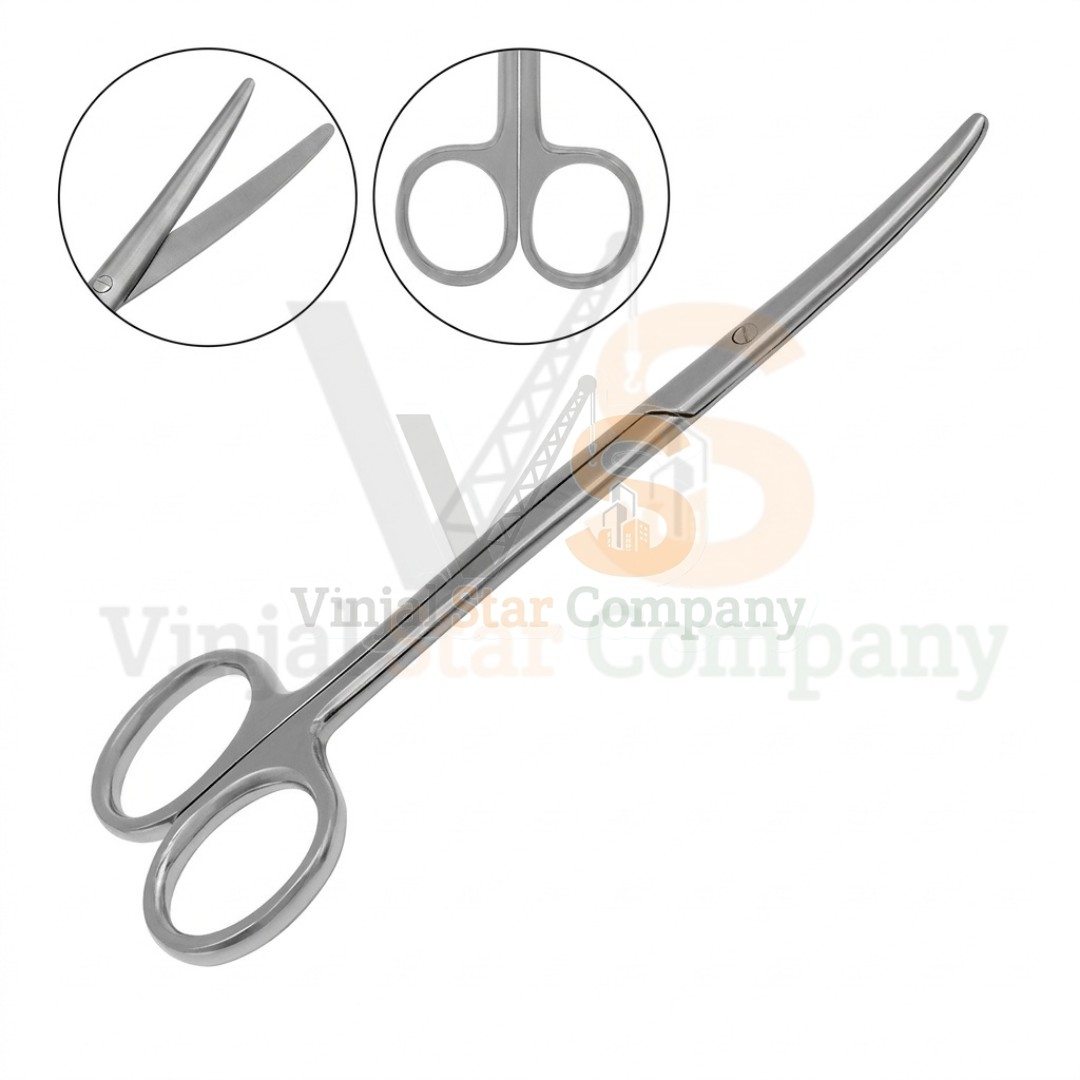
Scissor confusion causes the most exam mistakes. The rule is simple: tough jobs get Mayo, delicate jobs get Metzenbaum.

- Mayo scissors — heavy, sturdy scissors for cutting suture material and tough tissue like fascia; straight blades are typically used for suture, curved for tissue.
- Metzenbaum scissors — long shanks with short, blunt-tipped blades made for dissecting delicate, thin tissue — never for suture, which would ruin their fine edge.
- Lister bandage scissors — the angled, blunt probe tip slides safely under bandages so dressings can be cut without nicking skin. Browse our instruments
Memory trick: “Mayo for muscle, Metzenbaum for mice” — if the tissue is tough, reach for Mayo; if it’s delicate, reach for Metzenbaum.
Forceps: Grasping and Holding Tissue
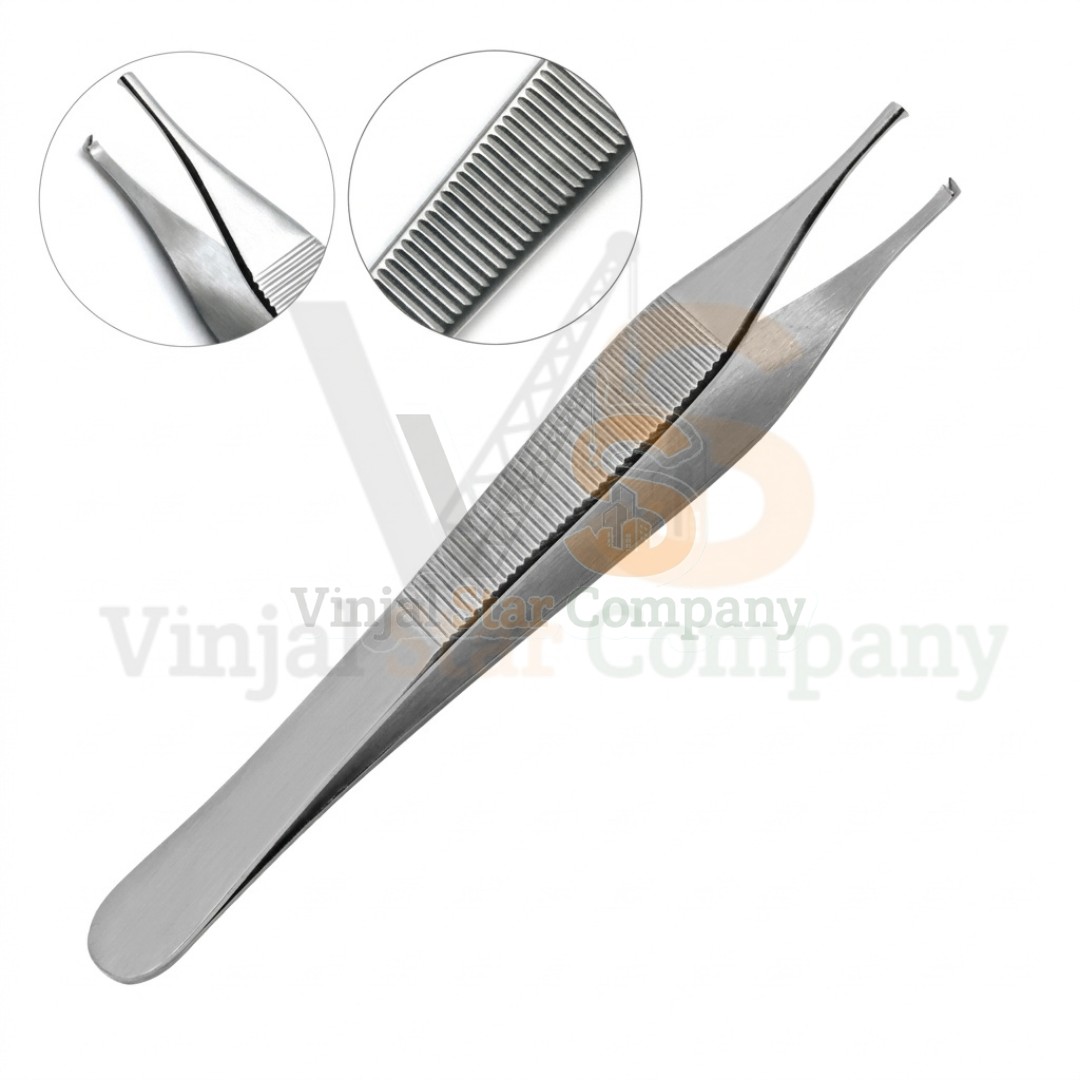
Forceps are extensions of the surgeon’s fingers. Toothed forceps grip skin and firm tissue; smooth forceps handle things gently.
- Adson tissue forceps (1×2 teeth) — fine forceps for holding skin edges during wound closure; the “1×2” means one tooth on one jaw interlocks with two on the other.
- Allis tissue forceps — interlocking teeth along the full jaw that lock onto firm tissue such as fascia, so it can’t slip during traction.
- Dressing (thumb) forceps — smooth, non-toothed jaws for picking up dressings, gauze, and handling tissue without causing trauma.
Hemostats and Needle Holders: Clamping and Suturing
These look similar at first glance, which is exactly why examiners love asking about them.
- Kelly hemostatic forceps — used to clamp larger blood vessels; the transverse serrations run along only part of the jaw.
- Crile hemostatic forceps — a slightly smaller cousin for clamping smaller vessels, with serrations running the full length of the jaw.
- Mayo-Hegar needle holder — broad, sturdy jaws (with no cutting blade) built to grip and drive suture needles through tissue.
Memory trick: “Kelly’s knee” — Kelly serrations stop halfway, like a bent knee; “Crile cries all the way” — Crile serrations run the whole jaw. And if it has a blade between the jaws, it’s scissors, not a needle holder.
Retractors and Suction: Exposure and Visibility
Surgery is as much about seeing as cutting. These instruments hold tissue aside and keep the field clear.
- Richardson retractor — a handheld, right-angled blade used to pull back wound edges in open procedures.
- Balfour retractor — a self-retaining frame with interchangeable blades that holds the abdominal wall open without an assistant’s hand.
- Yankauer suction tip — a rigid suction tip for clearing blood, saliva, and fluids from the mouth and throat.
- Sponge forceps — looped, fenestrated jaws that hold folded gauze for prepping skin with antiseptic and blotting the surgical field.
Study Tips: Memorizing Surgical Instruments Names and Uses for Exams
- Learn in pairs. Kelly vs. Crile, Mayo vs. Metzenbaum, Adson vs. Allis — examiners test contrasts, so study them side by side.
- Touch the instruments. Names stick far better after you’ve opened, closed, and felt the weight of each one in a skills lab.
- Say the use out loud. “Metzenbaum — delicate dissecting scissors.” Speaking the function cements the link between name and job.
- Build a personal “instrument map.” Sketch a basic surgical setup and label where each instrument sits on the Mayo stand — spatial memory is powerful.
- Quiz backwards. Have a partner name a function (“clamp a small vessel”) while you name the instrument (“Crile”). This mirrors how instruments are actually called for in theatre.
FAQs About Surgical Instruments Names and Uses
What’s the easiest way to tell Kelly and Crile forceps apart?
Look at the jaw serrations: Kelly forceps have serrations on only part of the jaw (“Kelly’s knee” — they stop halfway), while Crile forceps are serrated along the full length. Kelly is also generally used on slightly larger vessels.
Why shouldn’t Metzenbaum scissors be used to cut suture?
Metzenbaum blades are thin, delicate, and blunt-tipped for fine tissue dissection. Cutting tough suture material with them damages the cutting edge. Mayo scissors are the correct choice for suture.
What does “1×2 teeth” mean on Adson forceps?
It describes the interlocking tip: one fine tooth on one jaw fits between two teeth on the opposite jaw, giving a secure but delicate grip on skin edges.
Which blade is used for a stab incision?
The No. 11 blade, with its sharp pointed tip, is designed specifically for stab incisions — for example, when creating an opening for a surgical drain.
A Note for Future Buyers
If you’re a student today, you may be a purchaser tomorrow. Vinjal Star manufactures the instruments in this guide — scalpels, scissors, forceps, hemostats, needle holders, and retractors — in Sialkot, Pakistan, supplying hospitals and distributors worldwide on a wholesale and OEM/private-label basis. For catalogs and pricing: info@vinjalstar.com. Browse our instruments